
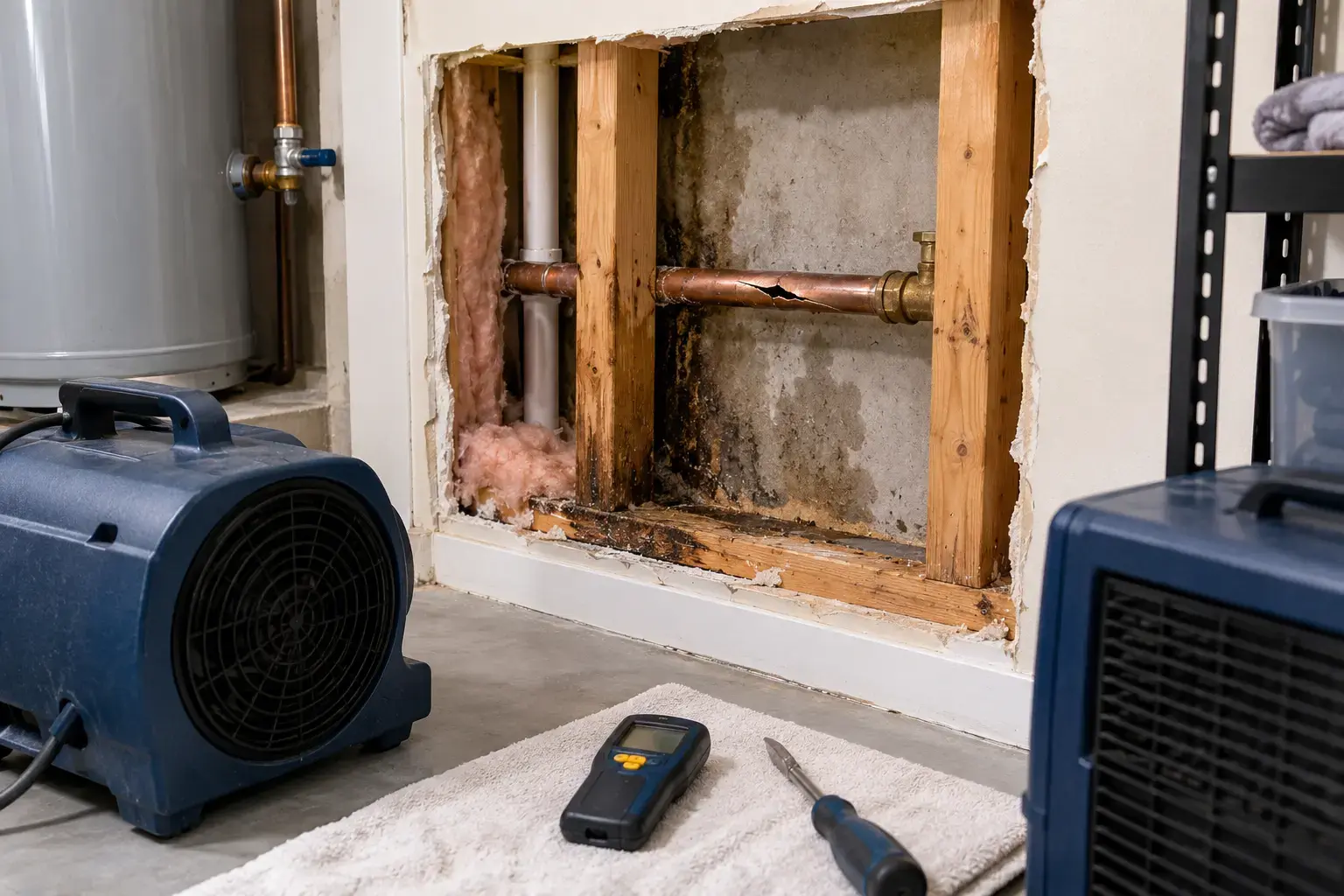
A burst pipe creates two jobs at once: stop new water from entering and deal with the water already in the building. A repaired connection can leave insulation, wallboard and floor layers wet. The first hour is the time to establish safe access, report the source and start arranging the right cleanup work.
Use this guide to decide what to do first, what to tell the people handling the loss and which materials need checking beyond the original puddle. For an active release, call about burst pipe water damage cleanup while the plumbing repair is being arranged. Emergency dispatch and mitigation are available 24/7.
1. Start with people, electricity and unstable materials
Keep people and pets away from standing water near electrical equipment, wet light fittings and a ceiling that is sagging. Do not walk through water to reach a breaker panel or unplug a device. Move to a dry position and describe these hazards when you call; access conditions affect what can happen next.
A room can look easy to mop while the space above it holds water. If a ceiling is bulging, keep the area below clear rather than puncturing the surface. Our ceiling water damage page explains why checking the cavity above the stain is part of the cleanup.
| What you notice | First priority | What to report |
|---|---|---|
| Water beside outlets or equipment | Keep out of the wet area. | Electrical equipment or fittings in the water path. |
| A sagging ceiling | Clear the space below it. | The room above, visible dripping and the extent of sagging. |
| Water still flowing from a known line | Isolate the supply only from safe, dry access. | Which shutoff was used and whether flow stopped. |
| Water reaching several rooms | Keep a dry access route available. | Connected rooms and any affected level below. |
2. Stop the supply without creating another hazard
If you know where the main water shutoff is and can reach it from a dry position, isolate the supply. Avoid forcing an unfamiliar valve or touching wet controls. A plumber or the appropriate repair provider needs to address the failed pipe before the supply is returned to normal use.
For a home using a private well, explain that water-supply arrangement during the call. Do not operate unfamiliar pump controls to investigate a leak. If freezing preceded the break, mention which fixtures stopped flowing and when water returned; frozen pipe cleanup needs attention to the plumbing route and the spaces that became wet during thawing.
Record the time the supply was isolated. That simple note helps explain the sequence later and lets the cleanup team distinguish an active release from water retained in building materials.
3. Follow the water above, beside and below the leak
Describe the first place you saw water, then identify the room or cavity above it and the level below. Water can run along a pipe, follow framing or move under a threshold before it appears elsewhere. A narrow wet patch at a baseboard can be the visible edge of a larger affected assembly.
Include cabinets, closets and the room on the other side of a wet wall in the report. If the release started around equipment, the water heater leak cleanup and appliance leak cleanup pages explain common concealed edges to check. A water damage inspection helps map accessible moisture before the scope is chosen.
You can collect useful information without pulling materials apart. Note wet trim, swelling at a cabinet base and marks on the ceiling below. Leave opening work around concealed wiring, plumbing or unstable materials for an agreed access plan.
4. Separate water extraction from structural drying
Emergency water extraction removes accessible liquid water. It can reduce pooling on a hard floor or water retained in a carpet, but it is only one stage of the work. Drying addresses moisture absorbed into the materials that remain in the building.
Air movement, dehumidification and access to wet surfaces support structural drying. Material checks guide adjustments. Ask what is being measured, where access is limited and which surfaces need opening before a cavity is closed again. Equipment should be positioned for the affected assembly and the safe use of adjoining spaces.
| Material or assembly | What can stay wet | Cleanup question |
|---|---|---|
| Wallboard and insulation | The cavity behind an apparently small stain. | Does affected board or insulation need removal for access? |
| Wood flooring | Board undersides and the subfloor. | What readings and drying access guide the flooring decision? |
| Carpet and padding | The layer below the visible surface. | Which layers can remain and which need handling separately? |
| Cabinet bases | Toe-kicks, recesses and adjoining wall edges. | Can moisture be reached without trapping it behind the cabinet? |
| Ceiling assembly | Insulation and framing above the room. | Where did water travel before it became visible below? |
5. Check the basement or crawl space under the release
In Port Republic and the surrounding Southern Maryland service area, basements and crawl spaces are common home features. If the leak began on an occupied floor, tell the team which type of space is below it. Water in a concealed lower assembly can remain after the living area has been wiped.
Crawl space water cleanup focuses on accessible pooled water, wet insulation and the underside of the floor. Flooded basement cleanup also needs attention to stored contents, finished wall bases and equipment access. Do not enter standing water or an unfamiliar confined space just to confirm the route.
For a finished lower level, identify furniture or boxes against the wet wall and any flooring that connects to another room. Those details help plan the work boundary and the order in which belongings can be handled.
6. Photograph the damage without delaying source control
From a safe position, take one wide photograph of each affected room before close-ups. Include the relationship between the leak, wet wall and floor below. A sequence of connected views is easier to follow than several tight shots of the same stain.
Write down discovery time, shutoff time and the repair provider contacted. Save receipts and messages about the source repair and cleanup. If you move small dry belongings to maintain access, note where they came from. Our water damage documentation guide includes an inventory table and a recordkeeping workflow you can use as the job progresses.
Ask your insurer what it needs and how it wants the loss reported. Keep photographs and the agreed cleanup scope together so a later question about a wet room can be connected to the work performed there.
7. Ask these questions before cleanup and repairs
Start with the boundary: which rooms and materials are included, and what will happen if inspection finds another affected area? Then ask how water removal, material handling, cleaning and drying are separated in the scope. A pipe repair, building cleanup and replacement of finishes involve different decisions.
For soft or damaged walls, discuss wet drywall removal and access to the cavity. For lifted wood boards, review hardwood floor water damage before sanding or a replacement decision. If the loss affects a business, commercial water cleanup also needs an authorized site contact and a plan for staff routes and stock.
Before equipment is removed, ask about the current moisture observations, source-control status and repairs still needed. Keep that handover with your other records.
8. Avoid cleanup shortcuts that conceal moisture
Do not paint over a wet mark, cover damp flooring with stored belongings or close an opened cavity before the drying question is resolved. These actions can obstruct access and leave the underlying condition harder to inspect. Speak with the team before moving or turning off drying equipment.
Avoid a household vacuum for water pickup and do not pull a heavy appliance across softened flooring. If a musty smell or visible growth develops, report it and avoid disturbing the surface. Mold removal and moisture cleanup address the affected materials and damp condition together. The EPA moisture and mold guide emphasizes prompt drying and correction of the water problem.
9. Keep the next day organized around the work plan
After the immediate release is controlled, keep one point of contact for property access and questions. Record any change: a new stain, a room that becomes wet again or a source repair that is still pending. Those updates are more useful than assuming every remaining mark has the same cause.
Review our water damage restoration process for the sequence from extraction to repair planning. If outside rain was involved too, the bay storm water damage guide explains how different entry routes can overlap. Call Port Republic Water Team to discuss the rooms, water source and access your cleanup needs.
More questions about this guide
If the pipe is repaired, why does cleanup continue?
Stopping the supply controls new water. Insulation, wallboard and floor layers can still hold moisture, so extraction, material checks and drying address the water released before shutoff.
What should I tell dispatch when I cannot reach the shutoff?
Report that water is still entering and explain the access hazard. Stay out of standing water near electrical equipment and let the appropriate repair provider handle unsafe or unfamiliar controls.
Should wood flooring be sanded during the first drying stage?
Wait until the floor and subfloor moisture have been evaluated. Board movement and retained water affect the flooring repair decision, so discuss drying access before sanding or covering the area.