Burst pipe behind a wall
Pipe water can reach insulation, baseboards and the ceiling below. We follow that path, extract the release and open affected materials where drying needs access.
Explore this service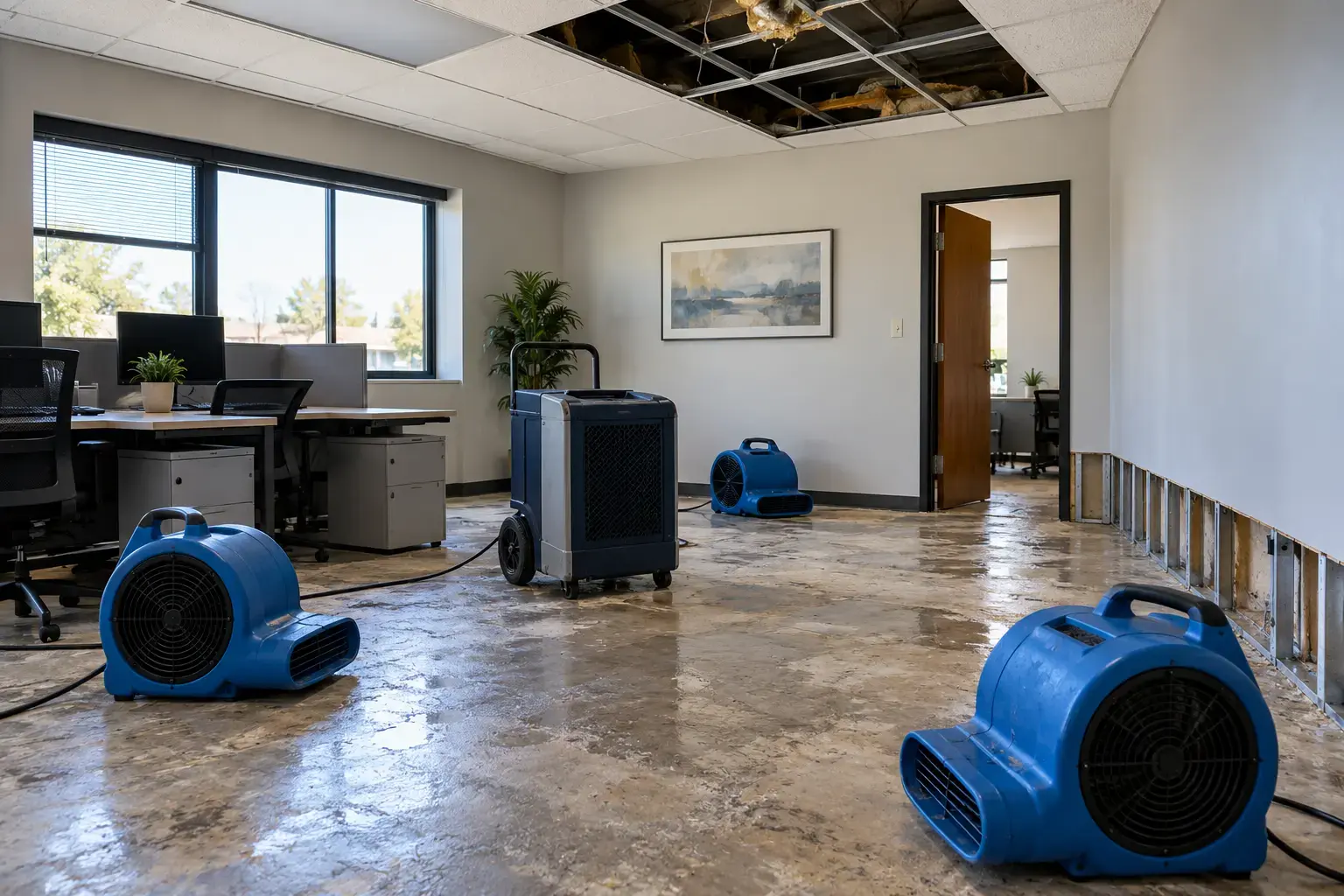
24/7 water removal, drying and cleanup for homes and businesses across Port Republic and Southern Maryland.
Call Now · (443) 951-6283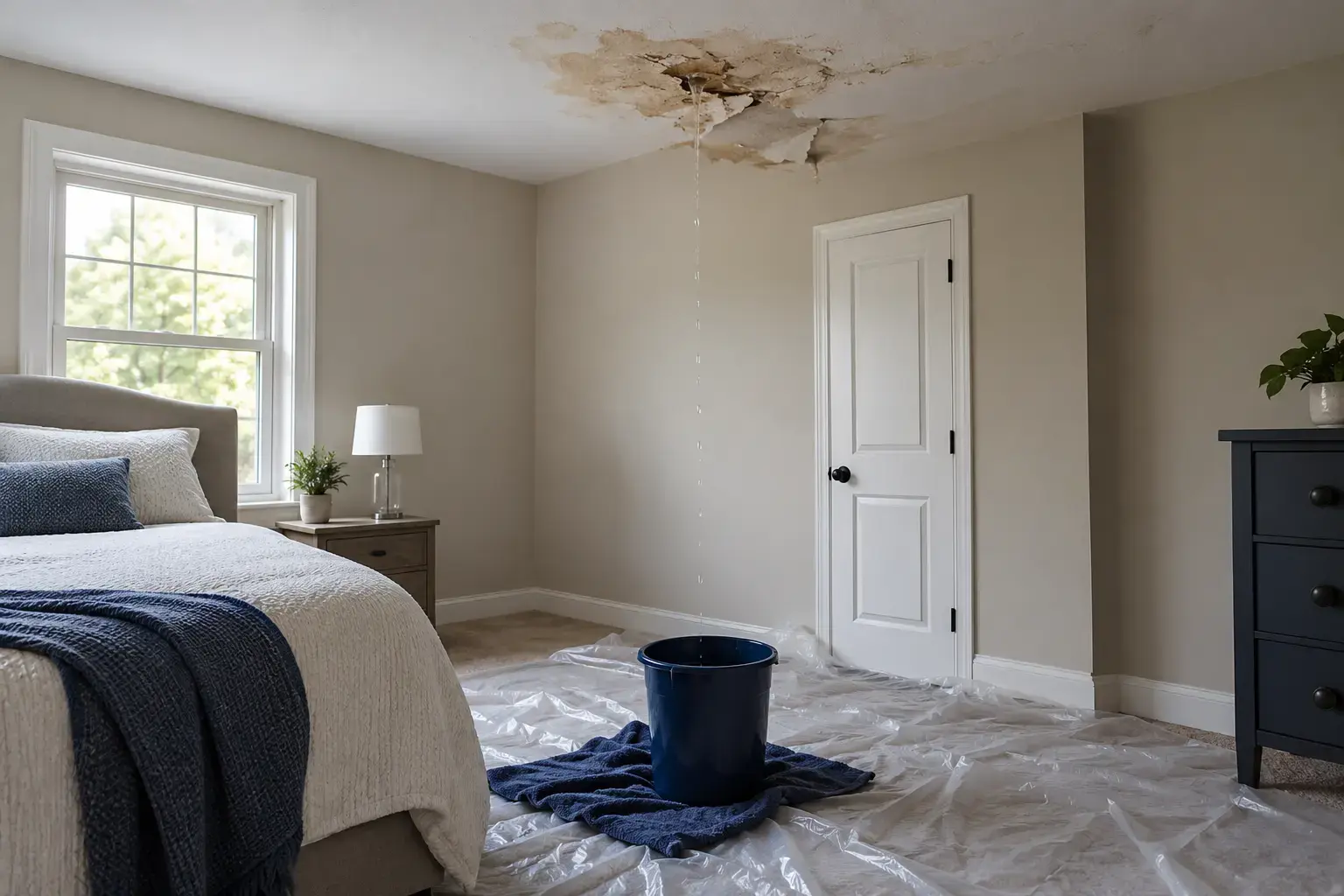
When water reaches your floors, walls or ceiling, call us for water damage restoration in Port Republic. We remove standing water, inspect the spread and dry affected materials in homes and businesses. A repaired pipe can leave insulation, wallboard or subflooring wet; our cleanup plan addresses that remaining moisture.
We dispatch for emergencies 24/7. Port Republic is in Calvert County, between the Chesapeake Bay and the Patuxent River. Rural homes in the region often use private wells and septic systems, and both crawl spaces and basements are common. Tell us how your property is arranged and where water first appeared so we can plan access above, below and beside the leak.
Our water mitigation work includes extraction, structural drying, flood cleanup and mold-affected materials. We explain the wet boundary, removal needs and repair steps. Call while the source is being controlled so moisture has less time to spread.
Call Now · (443) 951-6283Choose the service that matches your leak, flood or moisture problem to see the cleanup work, warning signs and planning costs.
We extract water, check adjoining rooms and dry affected materials. The cleanup plan follows moisture into wall cavities, ceiling assemblies and the floor layers below.
Learn moreStanding water spreads into porous materials. We extract it with equipment suited to the depth and flooring, then check retained moisture to plan the drying stage.
Learn moreA failed supply pipe can soak several rooms. We extract released water, inspect spaces around the break and dry affected walls, ceilings and floor assemblies.
Learn moreA frozen line can leak as it thaws. We follow the plumbing route, remove released water and check nearby insulation, ceilings and floors for retained moisture.
Learn moreA flooded basement needs water removal and contents access. We inspect finished wall bases and floor coverings, then plan cleanup and drying around the affected materials.
Learn moreWater below your home can wet insulation and floor framing. We review crawl-space access, extract pooled water and address damp materials beneath the occupied rooms above.
Learn moreWastewater requires controlled handling. We separate contaminated areas, remove sewage water and damaged porous materials, then clean accessible surfaces before planning the remaining structural drying work.
Learn moreStorm water enters through different routes. We trace the interior water path, remove affected water and debris, and dry wet building materials after source control work.
Learn moreA ceiling stain can hide wet insulation or framing. We trace overhead moisture, open affected materials where needed and dry the cavity before ceiling repairs begin.
Learn moreA heater leak can reach adjoining rooms. We remove released water, check the platform and wall bases, and dry affected flooring after the source is controlled.
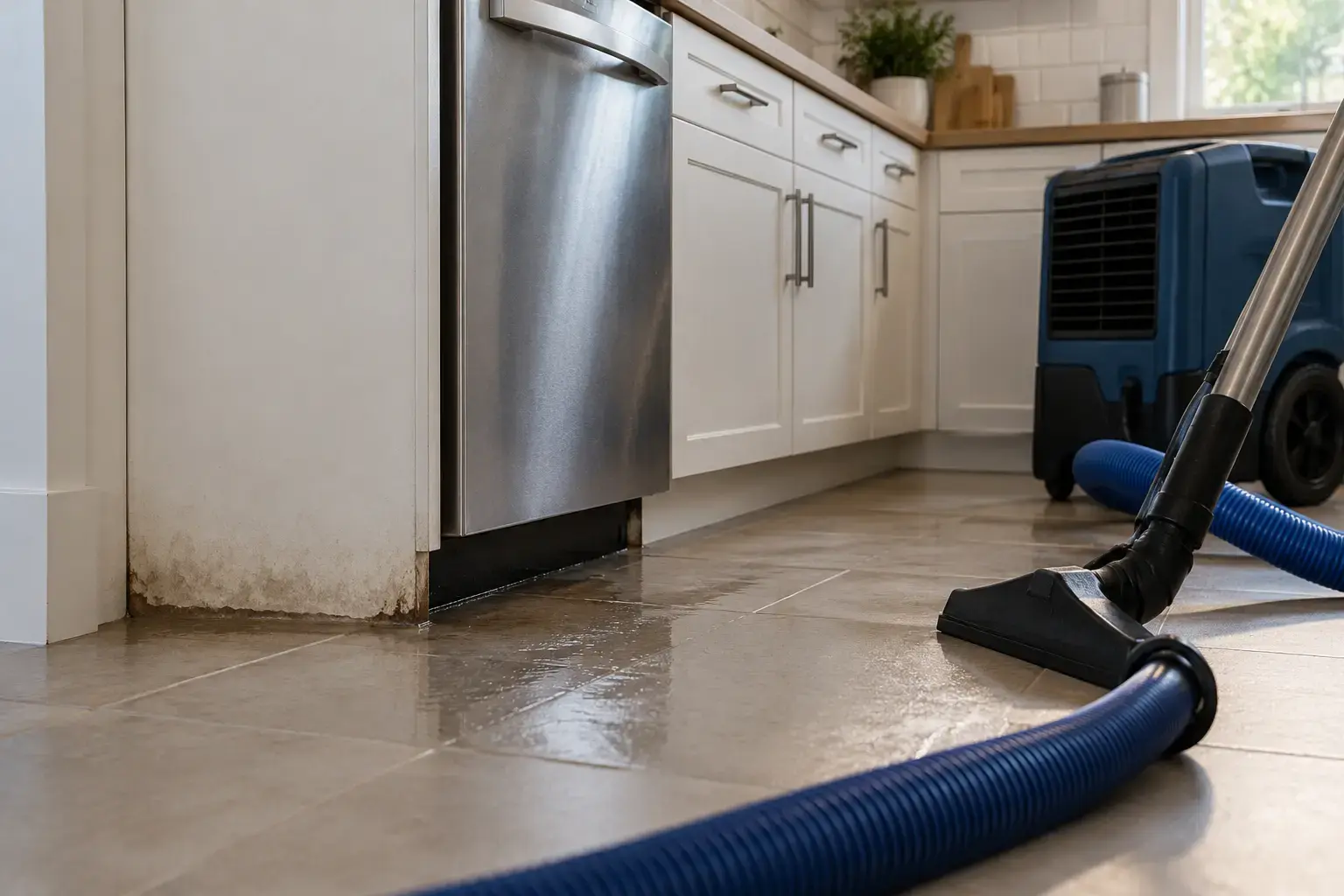
Learn moreAppliance water can collect behind fixed cabinets. We check the recess, cabinet bases and floor layers, then extract water and dry the areas the leak reached.
Learn moreRoof leaks can leave attic and ceiling materials wet. We trace the interior moisture path and dry affected assemblies while the roof entry point is corrected.
Learn moreDry-looking finishes can conceal moisture. We use material checks, air movement and dehumidification to dry accessible framing, wall assemblies and subfloors after standing water is removed.
Learn moreAffected wallboard can block cavity access. We define removal boundaries, protect adjoining dry surfaces and open the wet assembly so insulation and framing can be addressed.
Learn moreWater can remain beneath wood boards. We check flooring and subfloor moisture, remove accessible water and assess drying needs before the separate flooring repair is planned.
Learn moreA returning stain needs investigation. We review the leak history, inspect accessible materials and map moisture to help define the cleanup work needed at your property.
Learn moreBusiness water damage affects people and workspaces. We coordinate with your site contact, define work zones and organize extraction and drying around stock and safe access.
Learn morePersistent dampness can support mold growth. We plan controlled handling, remove affected porous materials and clean accessible surfaces while addressing the moisture source behind the problem.
Learn moreTell us what happened, what is wet and how to reach the property.
The first hours matter because water moves through joints, under trim and into porous surfaces. We use extraction equipment to lift accessible water from hard floors, carpet and other wet areas. Removing that liquid water reduces what the drying stage needs to address, while moisture checks show where the release has spread beyond the original room.
Drywall can absorb water at its base, flooring can swell and subfloors can remain wet beneath an intact finish. Leaving those materials damp can extend the cleanup and create conditions for mold growth. We inspect accessible adjoining spaces, explain any opening needed and set up air movement and dehumidification for the affected assembly. Keep clear of standing water near electrical equipment, and call while the plumbing or appliance source is being controlled. Read about emergency water extraction to understand the work that follows removal of the visible puddle.
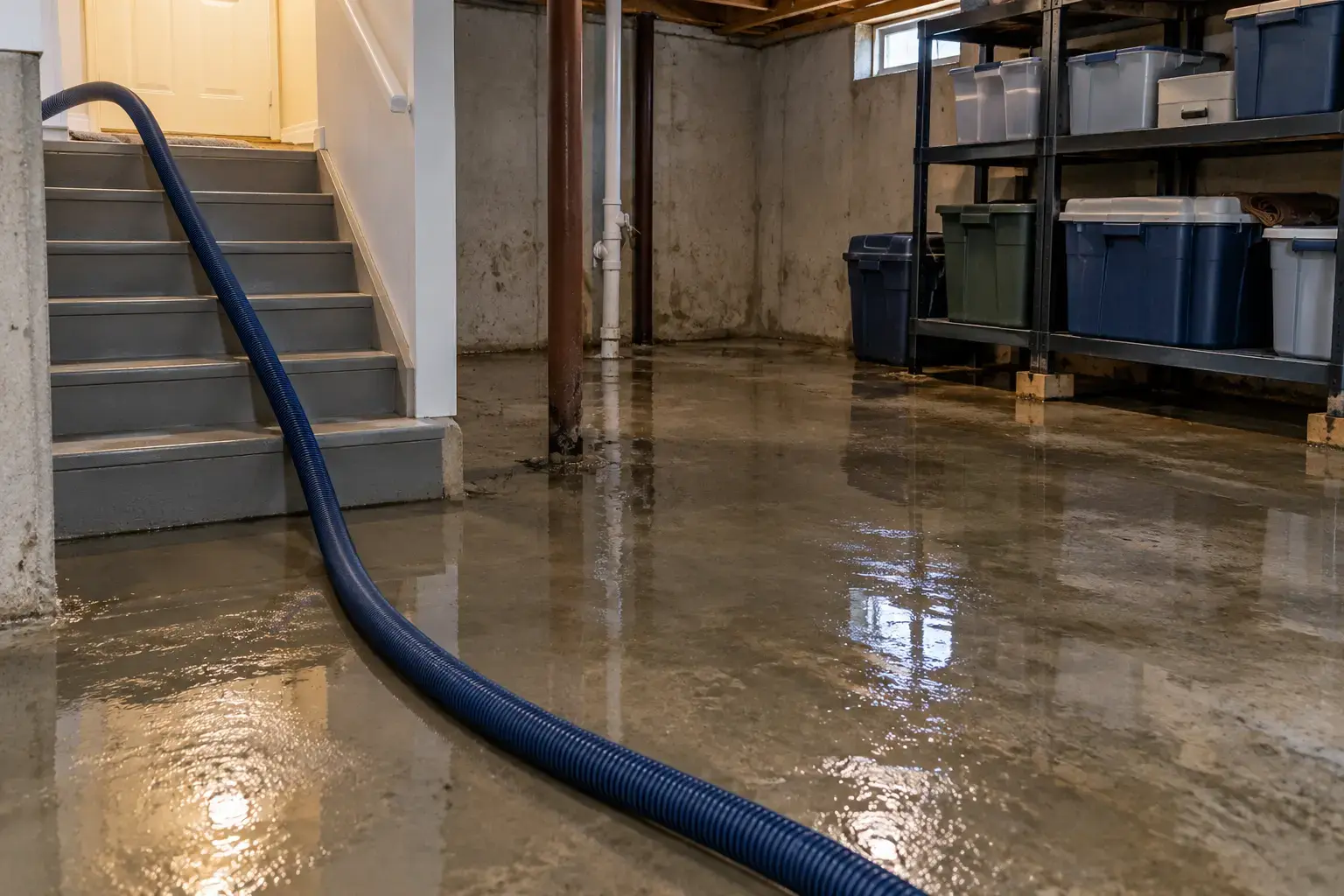
Storm runoff and groundwater can reach the lowest level of a home, leaving water around stored contents and finished walls. A flooded basement also needs careful access: stay out of water around electrical equipment, and report deep water or unstable materials when you call. We review the entry route and water condition before planning extraction and the handling of wet belongings.
Exterior floodwater can carry soil, debris and other contaminants into porous materials. Our flood cleanup includes removal of affected water, cleaning and sanitizing accessible surfaces, and decisions about wallboard, insulation and floor coverings that need removal. Drying then addresses moisture held in the building. Call before the wet boundary expands into adjoining spaces or storage areas. Explore flooded basement cleanup and storm and flood damage restoration for the steps involved in returning the interior to a condition ready for repairs.
Call Now · (443) 951-6283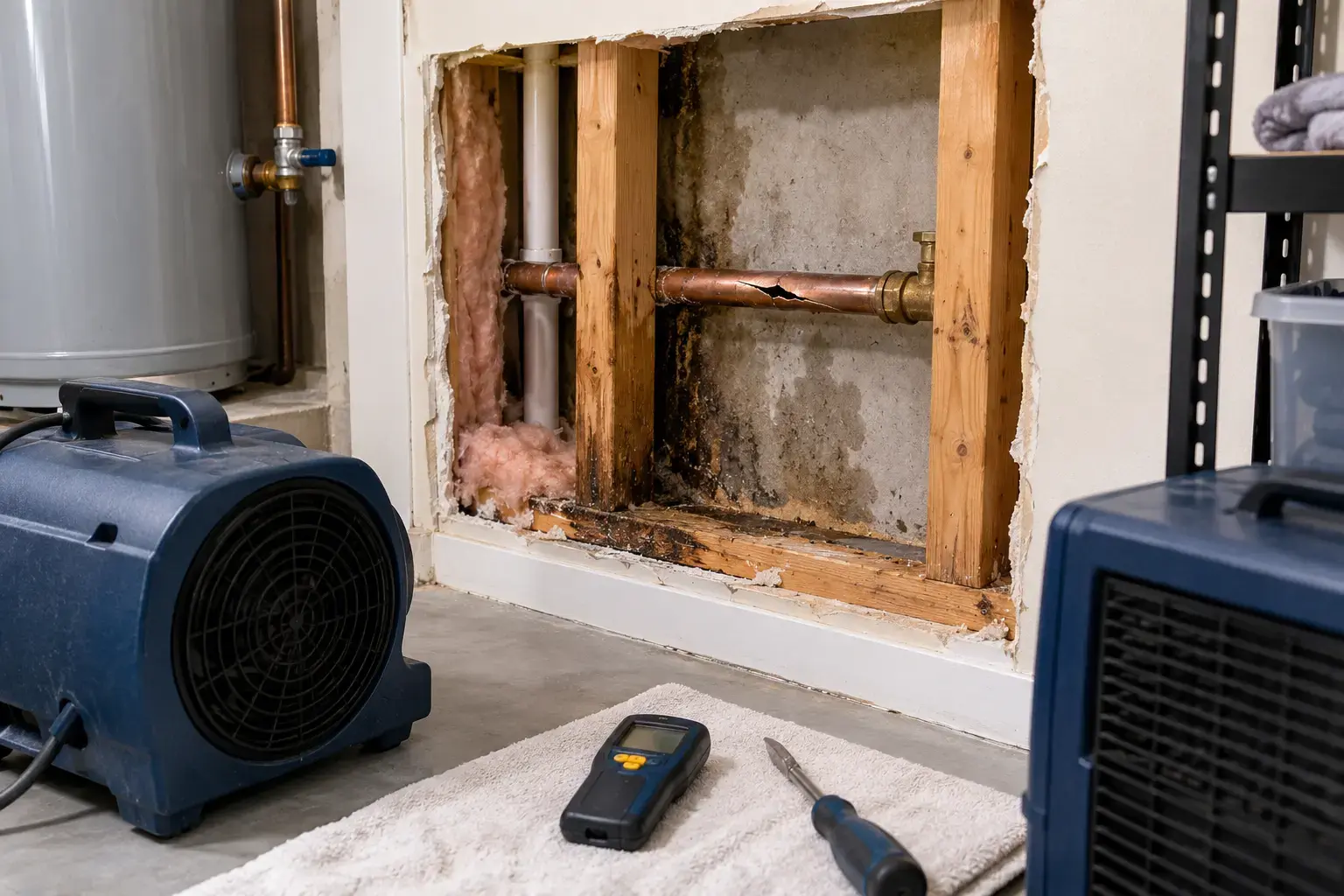
A split pipe can release pressurized water behind a wall, while a frozen line can start leaking as it thaws. Turn off the supply only if the shutoff is accessible from a safe, dry place. We trace the released water through the affected room, floor layers and spaces below, then extract water and dry the assemblies that remain wet after the plumbing repair.
Septic and sewer backups need a different handling plan. Many rural homes in the region use septic systems, and wastewater entering a room can contaminate floor coverings, wallboard and contents. Keep people and pets out, avoid contact and do not blow fans across the release. We separate the affected space, remove wastewater and damaged porous materials, and clean accessible surfaces before drying. Call to discuss burst pipe cleanup or sewage backup cleanup so the work matches the source and materials involved.
Call Now · (443) 951-6283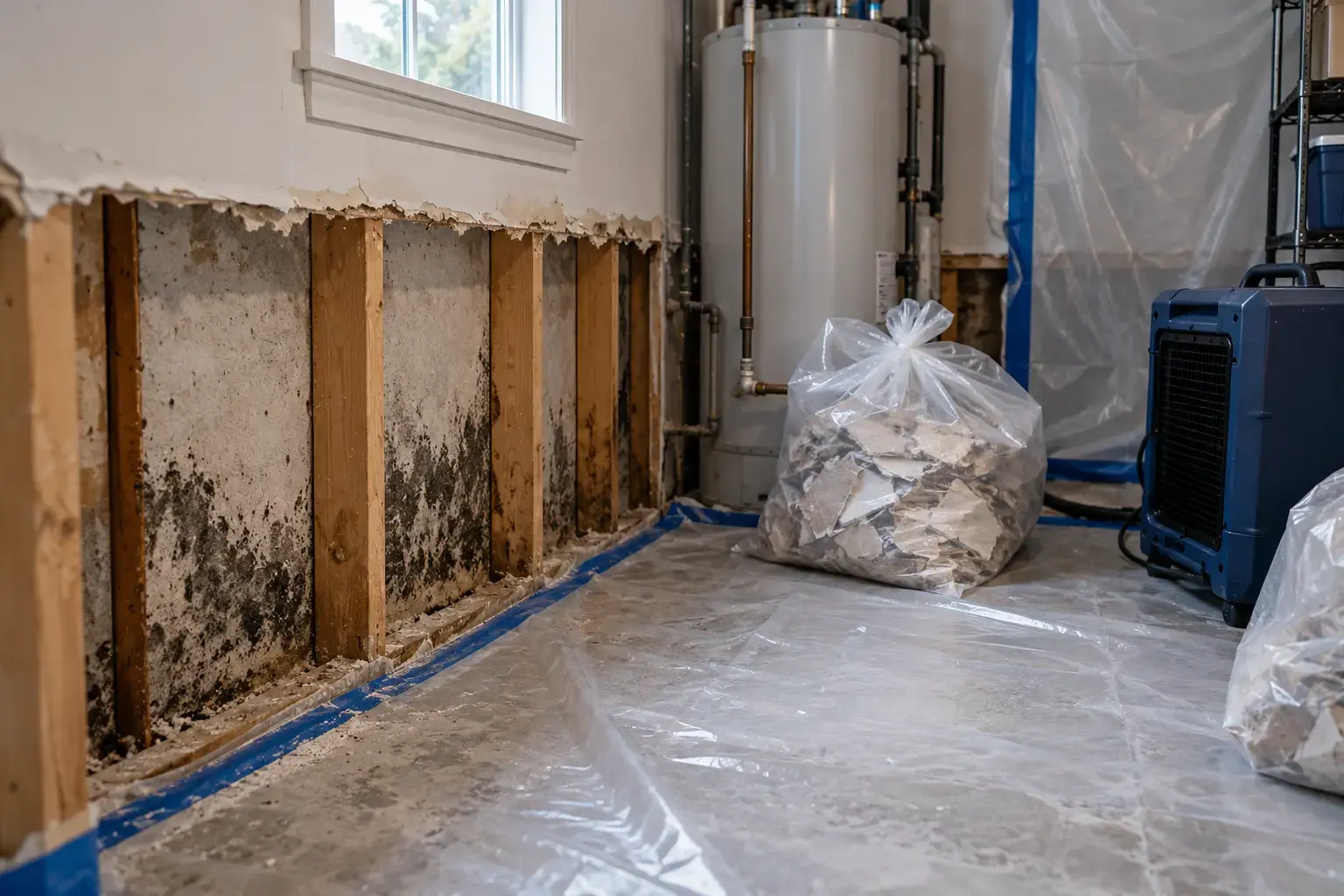
Wet drywall, insulation and wood can support mold growth within 24–48 hours when moisture remains. A returning musty smell or visible growth near a repaired leak is a reason to inspect the assembly behind the finish. We look for the damp condition supporting the problem and plan access to affected materials, including spaces behind trim or below a floor.
Mold removal and mold remediation work can include separating the affected area, controlled removal of damaged porous materials and cleaning accessible surfaces. Water removal and structural drying address the moisture that would otherwise remain in the building. Avoid brushing, sanding or pointing fans at visible growth while you arrange help. Call before painting or replacing finishes so the underlying condition can be addressed first. Our mold removal page explains the material handling, drying and repair-planning questions to discuss for your property.
Call Now · (443) 951-6283Tell us the source, affected rooms and immediate hazards. We provide emergency dispatch 24/7 and discuss property access with you.
We inspect visible damage and check adjoining materials for moisture. The water path guides access to wall, ceiling and floor assemblies.
We remove accessible water and position drying equipment around the wet materials. Moisture checks guide equipment adjustments and the next drying decision.
We clean and sanitize affected accessible surfaces and review material removal needs. We explain the water damage repair scope and remaining repairs.
Water damage restoration cost depends on the affected area, water category, materials and drying time. We review your property to prepare a scope and estimate.
| Job Size | What It Usually Involves | Estimated Range |
|---|---|---|
| Minor | One room, clean water, localized extraction and drying. | $1,500–$2,500 |
| Moderate | Several rooms or a basement, with broader drying and selective removal. | $2,500–$4,500 |
| Extensive | A large area or contaminated water, with more handling and material removal. | $4,500–$6,000+ |
Typical ranges, not quotes. Call (443) 951-6283 for an estimate for your property.
Call Now · (443) 951-6283Photograph each affected room from a safe position, then capture details such as stains, wet cabinet bases and damaged belongings. Write down when you discovered the water, the apparent source and when the supply or entry was controlled.
Save receipts, repair invoices and cleanup estimates. Keep damaged items until the adjuster tells you what to do with them, provided they can be retained safely; ask about contaminated or hazardous items before handling or storage. An item list organized by room helps connect the photos with what was affected.
Contact your insurer about reporting requirements and the documents it needs. Your insurance company decides coverage under your policy.
Pipe water can reach insulation, baseboards and the ceiling below. We follow that path, extract the release and open affected materials where drying needs access.
Explore this serviceA wet lower level can soak stored belongings, floor coverings and finished wall bases. We review the water source, remove standing water and check the adjoining materials that need cleaning and drying.
Explore this serviceAppliance water can spread beneath cabinets into the subfloor. We check the recess and cabinet bases, then plan extraction and drying around the areas the leak reached.
Explore this serviceA growing ceiling stain can hide wet insulation or water moving along framing. We inspect above and around the stain and address affected materials before the ceiling finish is repaired.
Explore this serviceA tank or connection leak can move beyond the utility room into adjoining flooring. We remove the released water and check the platform, wall bases and nearby rooms after source control.
Explore this serviceWastewater can contaminate floor coverings, wallboard and anything stored in its path. We separate the affected area, remove wastewater and damaged porous materials, and clean accessible surfaces before drying.
Explore this serviceWe provide water damage restoration for Port Republic and the Southern Maryland communities below, with emergency dispatch and mitigation available 24/7. Call our water damage company with the affected rooms, water source and access details so we can discuss the work your home or business needs.
Start as soon as access is safe, because water keeps moving into porous materials. We dispatch for emergencies 24/7; call while the source is being controlled.
Coverage depends on the source and your policy, including any flood or backup coverage. Contact your insurer about the loss and keep photos, repair records and receipts together.
Drying time depends on the materials, absorbed water and access to wet surfaces. We use moisture checks to follow progress and adjust equipment before the affected assemblies are enclosed.
Mold can begin growing on wet materials within 24–48 hours when damp conditions continue. Water removal, drying and attention to affected porous materials help reduce that risk. Call about visible growth or a returning musty odor.
Shut off the water only if you can reach a known valve from a safe, dry position. Keep people away from standing water, wet electrical equipment, sewage and sagging ceilings. Photograph the damage from a safe location and leave heavy or contaminated items for review.
Yes, we handle water removal, drying and cleanup for business interiors. We discuss staff access, affected stock and work zones with your building contact before organizing the work.
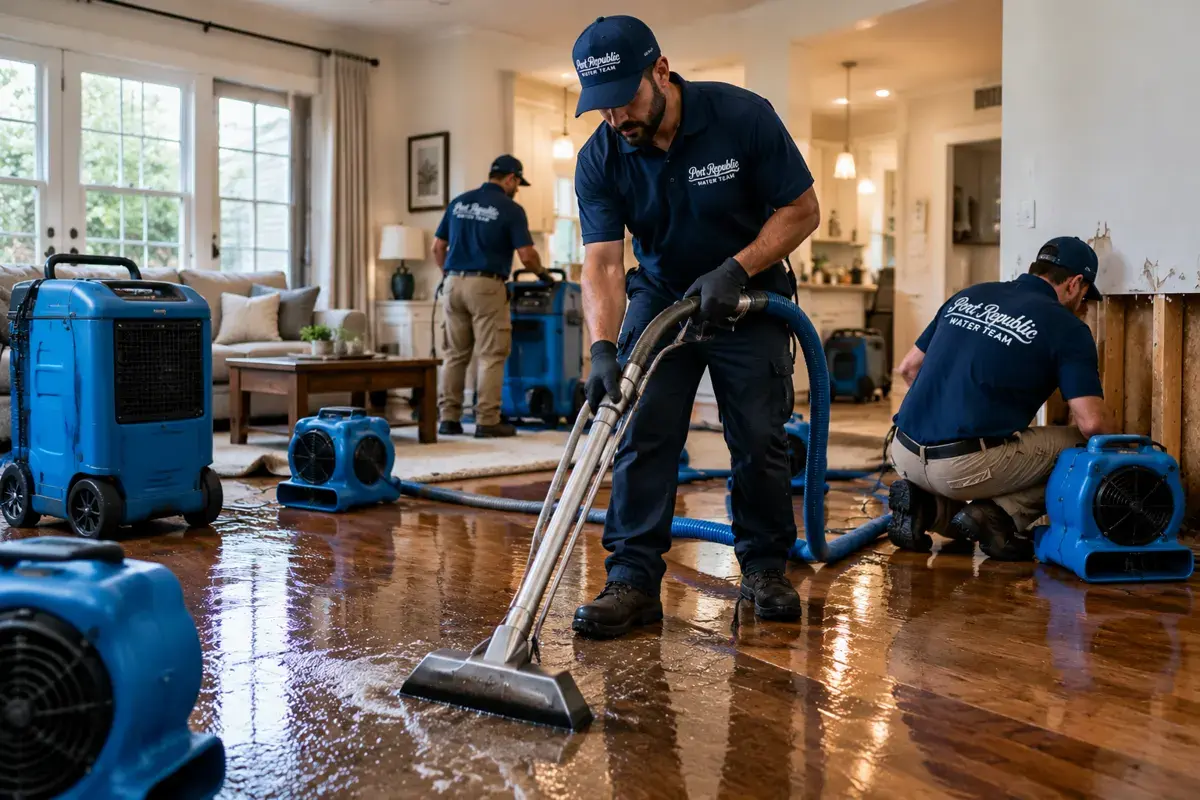
A practical sequence for safe access, source control and documentation.
Read the guide →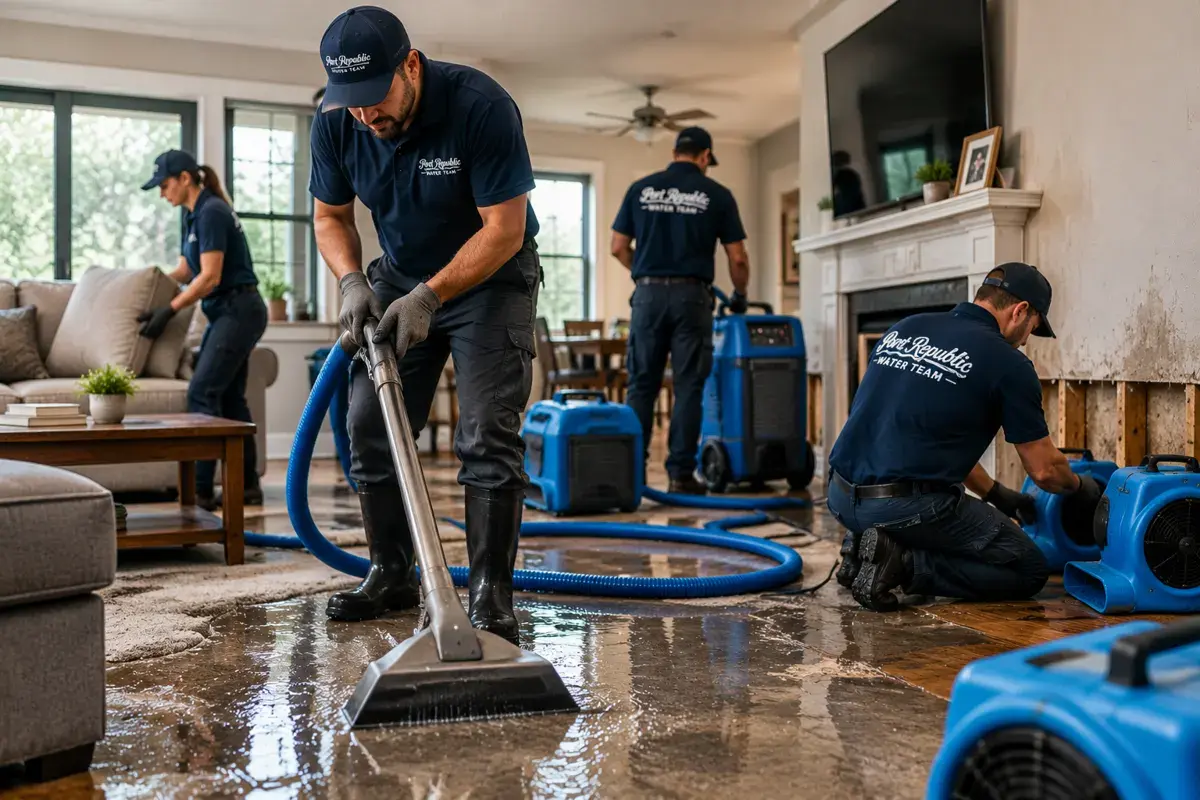
Understand rain entry, exterior flooding and moisture that remains inside.
Read the guide →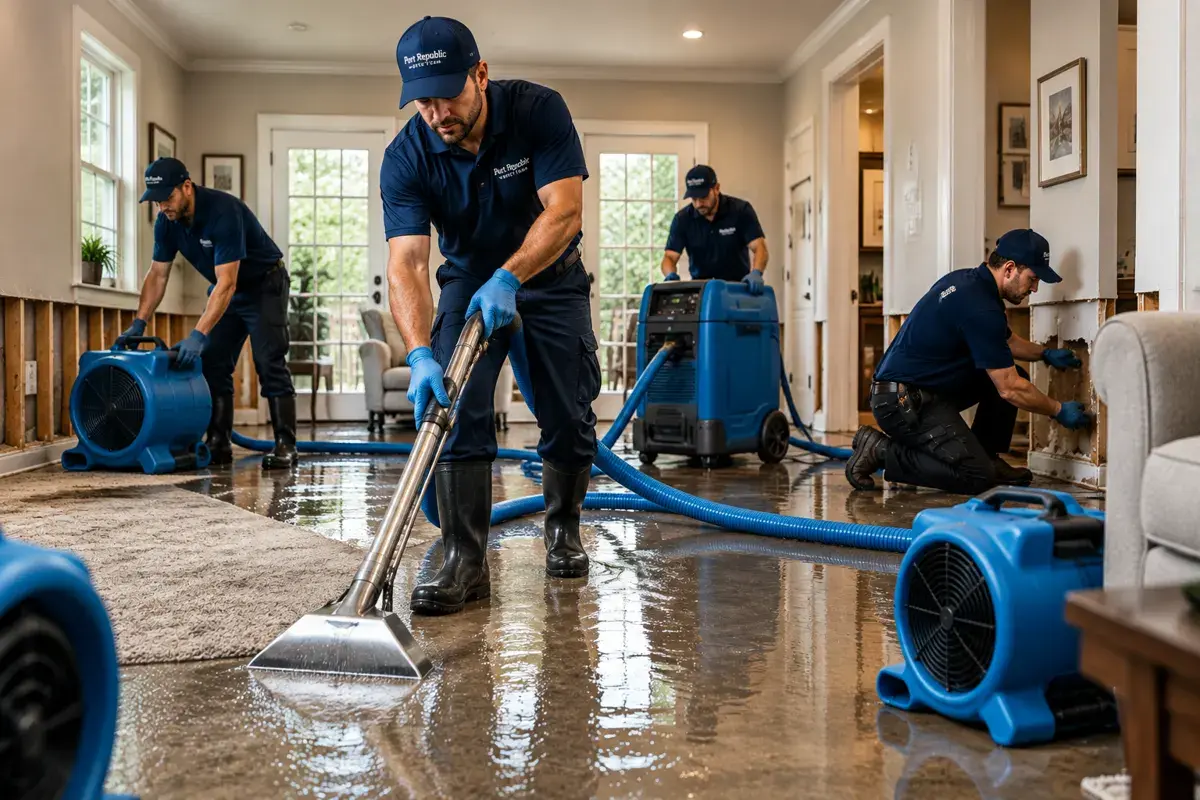
Build a useful record without delaying necessary safety actions.
Read the guide →Serving Port Republic and Southern Maryland, 24/7